


Valery Fyodorov, 18 Haziran 2014
Rusya’da orta sınıf, bilim insanlarının ve gazetecilerin Amerika ve Batı Avrupa için yaptıkları orta sınıf tanımından çok farklı. Bizim orta sınıfımız daha çok Çin, Hindistan ve gelişmekte olan olarak anılan ülkelerin orta sınıflarına benziyor. Bu ülkelerde, orta sınıf küçük olmasa da hala azınlık konumunda. Batılı ülkelerde ise orta sınıfın oranı 1970’li ve 1980’li yıllarda nüfusun % 50-% 70’ine ulaştı; son 20-25 yılda artış hızı yavaşladı veya sayısal olarak küçüldü.
Çin, Hindistan ve Rusya’da orta sınıf her zaman çok daha mütevazı bir yer işgal etti. Rusya’da nüfusun % 30’unu geçmez. Ulusun % 70’ini temsil eden bir orta sınıf kalitatif olarak farklıdır ve iradesini yönetici sınıfa dayatacak kudrete sahiptir. Kalabalık bir orta sınıf toplumsal merdivende kendisinin üzerinde ve altında olanlara davranış normlarını, tarzı ve standartları kabul ettirebilir. Rus orta sınıfı bu tarife uymuyor. O, Rus toplumunun bel kemiği veya umudu değil, sosyal sınıflardan sadece biridir ; diğerlerinden ne iyidir ne de kötü. Kimse onu taklit etmeye çalışmaz.
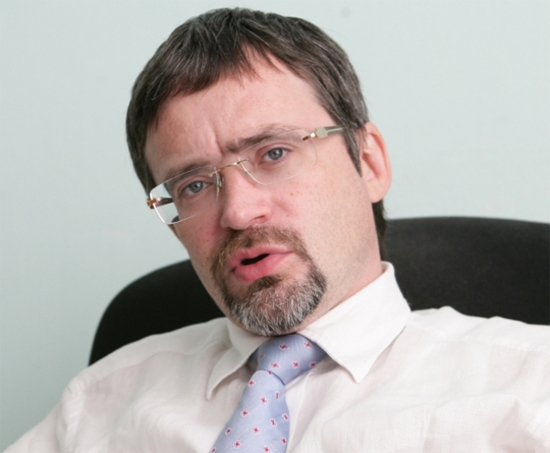
Valery Fyodorov: Rusya Kamuoyu Araştırma Merkezi Genel Müdürü
Rus orta sınıfı siyasal arenada çıkarlarını savunacak bir örgütlülükten de yoksundur. Sendikalar tarihsel olarak çalışanları bir araya getirdi. Benzer bir işlevi palazlanan Rus orta sınıfı için kim üstlenebilir ? Ülkede çok sayıda kulüp, grup ve hareket var ama dağınıklar. Rus orta sınıfı henüz örgütlü değil ve çıkarlarını koruyacak kimse yok. Bir süre önce Vladislav Surkov bu soruna devlet adına parmak basmaya çalıştı. Ülke vizyonunun önemli bir bileşeni olarak orta sınıfı güçlendirecek bir program oluşturdu. Ama birkaç yıl önce tüm bu çabalar sıfırlandı ve sonuç olarak orta sınıf Rusya toplumunda siyasal bir güç haline gelemedi.
Son olarak, Rusya’da orta sınıf beşeri sermayesini yitiriyor ; seyrelen saflarını kimin dolduracağı ve genişleteceği belli değil. Birleşik Devletler’de orta sınıf üniversite profesörleri ve avukatlar gibi profesyonellerden oluşur. Bizim orta sınıfımız çoğunlukla memurlar, subaylar ve entelejensiyanın geriye kalan unsurlarından meydana gelir. Bir başka ifadeyle, bizim orta sınıfımız özel sektör yerine devlete dayanır. Kamu şirketinde düzgün maaşa ve sosyal haklara sahip bir küçük memur orta sınıfa mensup kabul edilebilir ama toplumsal konumunu devlete borçludur. Rusya’da çok az insan kendi emeğiyle orta sınıfa girmiştir.
Rusya’da orta sınıf 1999-2008 yılları arasında hızla büyüyerek nüfusun % 25’ini temsil eder hale geldi. Ama 2008 yılındaki durgunluğu izleyen toparlanma döneminde orta sınıf hiçbir rakamsal veya kalitatif kazanım elde edemedi. Son iki yılda cumhurbaşkanı (Putin—ç.n.) ücretlerini yükselterek doktorları ve öğretmenleri orta sınıfa terfi ettirdi. Etkileri görülmeye başlasa da süreç yavaş işleyecek ve orta sınıfın yaşamında herhangi bir iyileşmeden bahsetmek için henüz çok erken. Orta sınıf hala nüfusun % 30’undan fazla değil ve büyüme dinamiği çok zayıf. Çünkü Rusya’da iş yapmanın zorlukları sebebiyle özelikle küçük ve orta boy girişimciler orta sınıfın dışına düşüyor. Buna karşılık askeri reform sayesinde çok daha yüksek ücret alan subaylar ve İçişleri Bakanlığı çalışanları orta sınıfa dahil ediliyor. Aynı şey öğretmenler ve doktorlar için de geçerli. Bu üç kategori sayesinde orta sınıf kısmen büyüyor. Ama ülkede çok fazla öğretmen ve doktor yok ; sayıları en fazla birkaç milyon. Dolayısıyla bu kaynak yakında kuruyacak.
Valery Fyodorov: Rusya Kamuoyu Araştırma Merkezi Genel Müdürüdür.
Çeviri : Dr. Ömer Aytek Kurmel
Cherkessia.net, 25 Haziran 2014
*****
Russia’s Middle Class Still Lacks Political Power
Valery Fyodorov,18/06/2014
The middle class in Russia is very different from what scholars and journalists describe as the middle class in America and West Europe. Our middle class is more like that of China, India and other countries that are usually referred to as developing. The middle class in these countries, while not small, is still a minority. Meanwhile, in Western countries the size of the middle class peaked in the 1970s and 1980s at 50%-70% of the population, and for the past 20-25 years has been either growing poorer or shrinking numerically.
In China, India and Russia the middle class has always been much more modest. In Russia it does not exceed 30% of the population. So a middle class that represents 70% of a nation is qualitatively different and has the power to impose its will on the ruling class. A large middle class can dictate behavioral norms, fashion, style and standards to those above and below it on the social ladder. The Russian middle class does not fit this mold. It is not the backbone or hope of Russian society, just one of the social classes – no better or worse than the others. Certainly, nobody is trying to emulate it in any meaningful way.
The Russian middle class also lacks the kind of organization necessary to articulate and advance its interests in the political arena. Trade unions historically have been a unifying force for the working class, but what serves a similar function for the budding middle class in Russia? The country has many clubs, groups and movements, but they are diffuse. The Russian middle class has yet to organize itself and there is nobody to defend its interests. Some time ago Vladislav Surkov tried to address this problem on behalf of the state. He devised a program to strengthen the middle class, which became a major part of his vision for the country, but all this came to an end several years ago and the middle class did not become a political force in Russian society as a result.
Finally, the middle class in Russia is losing its human capital, and it’s unclear who will replenish and expand its ranks. In the United States, the middle class consists of professionals like college professors and lawyers. Our middle class primarily draws from government workers, the officer corps and what remains of the intelligentsia. In other words, our middle class depends on the government rather than the private sector. A person with a minor position in a state corporation with a decent salary and benefits may be middle class, but they owe their position in society to that state corporation. Few in Russia have reached the middle class on their own steam.
The Russian middle class expanded rapidly between 1999 and 2008, reaching 25% of the population. But in the recovery that has followed the 2008 recession the middle class has not made any numerical or qualitative gains. In the last two years the president has pulled doctors and teachers up into the middle class by boosting their wages. This has already yielded some results, but the process will be slow and it is too early to speak about any qualitative improvement of the middle class. It still makes up no more than 30% of the population. And its growth dynamics are very weak, as entrepreneurs continue to fall out of the middle class owing to the difficulty of doing business in Russia, especially for small and medium companies. But the officer corps, the Interior Ministry and service personnel – who now earn much more thanks to the military reform – are being drawn into the middle class. The same is true of teachers and doctors. While these three categories are driving a small expansion of the middle class, there are not so many teachers and doctors in the country, several million at most, so this resource will be exhausted eventually.
Valery Fyodorov: is General Director of VCIOM (Russian Public Opinion Research Center)


Rusya en nihayetinde sessiz yığınlar haline mi getirdi yani şimdi orta sınıfı?
Nerden bakarsan bak enfekte bir durum.