


New Eastern Europe, 28 Ocak 2015
Eski Gürcistan Devlet Başkanı (2004-2013) Mihail Saakaşvili ile söyleşi.Söyleşiyi Yapan : Bartosz Marcinkowski
Söyleşinin tam metni New Eastern Europe dergisinin son sayısında yayınlandı : Baltık Cephesinde Yeni Bir Şey Yok mu ?
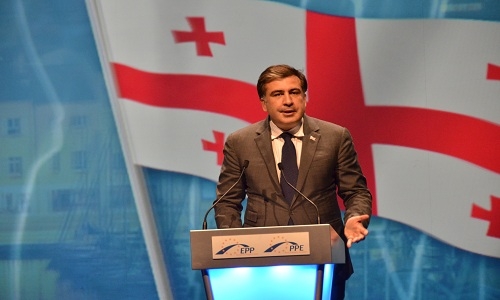
İki dönem arka arkaya (Ocak 2004-Kasım 2013) Gürcistan Devlet Başkanı olarak görev yapan Mihail Saakaşvili,
siyasetle uğraşmaya devam ediyor. Birleşik Ulusal HareketPartisi’nin kurucusu ve lideri.
Bartosz Marcinkowski:Ülkeniz Gürcistan’da kısa süre önce gelişmeler oldu. Hakkınızda açılan davalardan dolayı geri dönemiyorsunuz. 2015 yılı ve gelecek için planlarınız nedir ? Yakın gelecekte Gürcistan’a dönme ihtimaliniz var mı ?
Mihail Saakaşvili:Son haftalarda birkaç karar aldım. Devlet Başkanı Petro Poroşenko bana Ukrayna başbakanlığı birinci yardımcılığı makamını önerdi. Bu çok heyecan vericiydi. Ama etraflıca düşündükten sonra kabul etmemeye karar verdim. Bir yandan Ukrayna’ya yardım etmeyi gerçekten çok istiyordum ve elimden geldiğince de ediyorum. Diğer yandan Gürcistan yurttaşlığından çıkamazdım. Çünkü Gürcistan’ın da yardıma ihtiyacı var. Yurttaşlıktan çıkmam Gürcistan’a dönüşümü yıllarca geciktirecekti.
Ukrayna ile ilgili faal çalışıyorum. Eski Gürcistan hükümetinin birçok mensubu Ukrayna hükümetinde sağlık bakanı, içişleri ve adalet bakan yardımcılıkları gibi görevler üstlendiler. Yolsuzlukla mücadele ve başka makamlar için de düşünülen Gürcistan yurttaşları var. Bu konularda danışmanlık yapıyorum. Kiev’e sıkça gidiyorum ve deneyimlerimi hükümet yetkilileriyle paylaşıyorum. Ama Gürcistan siyasetiyle de yakından ilgiliyim. Gelecek seçimlerde başarı kazanma şansı olan tek muhalefet partisinin lideriyim. Gürcistan’a giremesem de partinin daha etkin örgütlenmesine yardım ediyorum.
B.M: Partiniz Ulusal Birlik Hareketi’nin parlamentoseçimlerinde başarı kazanması Gürcistan’a dönüş yolunuzu açar mı ?
M.S:Bidzina İvanişvili iktidarı kaybettiği zaman –ki şu anda yakın çevresi aracılığıyla herşeyi kontrol altında tutuyor- Gürcistan’a dönmemin önünde hiçbir engel kalmayacak. Hatta seçimlerden önce geri döneceğimden eminim. Gürcistan ve Ukrayna’da sivil toplum Rusya’ya göre çok daha güçlü. Hiçbir otoriter yönetim halk iradesinin önünde duramaz. Biz halk iradesine her zaman saygılı olduk. Halk değişim istediğinde iktidardan çekildik. Ömür boyu iktidarda kalacağına inanan ve ülkenin kendisine ait olduğunu düşünen İvanişvili de zamanı geldiğinde iktidarı bırakmak zounda kalacak.
B.M:Gürcistan Rüyası Koalisyonu’nun iki yıllık iktidarında başta Avrupa birliği olmak üzere Batı ile bütünleşme bakımından ciddi gelişmeler yaşandı. Gürcistan Rüyası’nın Batı ile yakınlaşma politikanızı sürdürdüğünü düşünüyor musunuz ?
M.S:Euro Meydan protestoları başlamadan birkaç hafta önce Viktor Yanukoviç’le uzun uzun konuştuk.Sözleri Avrupa-yanlısıydı. Bu tip yöneticiler Avrupa’nın lehinde konuşurlar ama sonunda tercihlerini hep Rusya’dan yana kullanırlar. Yöntemleri kaba kuvvete, tam denetime ve siyasal baskıya dayanır. Bu tip rejimlerin Avrupa’ya girmeleri imkansız. Şimdiki Gürcistan hükümeti ülkeyi izole etmek için birçok adım attı. Söylemleri bizi yanıltmasın. Gürcistan’ın yeni savunma bakanı Gürcü subaylara savaşmak için Ukrayna’ya gitmemeleri için şantaj yaptı. O Rusya tarafından finanse edilen, Rusya-yanlısı bir partiye mensup. Hükümet Rusya’nın talebi üzerine güvenlik bakanlığını yeniden kuruyor. Oysa biz feshetmiştik. Rusya etkisini bu bakanlık aracılığıyla yayacak. Rusya bunun karşılığında Gürcistan yurttaşlarına vizeyi kaldırma sözü verdi.
Gürcistan hükümeti Abhazya’dan geçecek demiryolunun yeniden açılmasından bahsediyor. Demiryolu Rusya’ya Ermenistan’daki askeri üslerine ve İran’a erişim imkanı sağlayacak. Rusya’nın başarısı Gürcistan’ın işbirliğine bağlı. Ne yazık ki ufukta Avrupa yok. En iyi ihtimalle Rusya’yı hoşnut tutma politikası izlenecek veya en kötüsü doğrudan Vladimir Putin’den emir alınacak.
B.M:Bidzina İvanişvili nasıl ortaya çıktı ? Onun öyküsü Rusya’da yatırımları olan ve Moldova mahkemesinin kararıyla seçime girmesi yasaklanan Moldovalı işadamı Renato Usatii’ye çok benziyor.
M.S:Arada hiç fark yok. Usatii -Estonyalı siyasetçi Edgar Saavisar gibi- Rusya Demiryolları ile bağlantılıydı.İvanişvili Gazprom’la bağlantılı. O bu şirketin en büyük özel hissedarı. İşleri Rusya’da ve Rusya Federal Servisi’nden talimat alıyor. Durum her yerde aynı.
B.M:Vladimir Putin’le konuşma şansınız olsaydı, ona ne derdiniz ?
M.S:Hükümete geldiğimizde dünyada hiçkimse Putin’le konuşmak istemiyor olacak. O hükümette yer alıp almayacağımı bilmiyorum ama iktidara gelmesi için elimden geleni yapacağım. Şartlar çok çabuk değişiyor. Putin bir dizi askeri maceraya girişecek. Mariupol’a yeni saldırılar planlıyor. Amacı Melitopol üzerinden Kırım koridorunu ele geçirmek. Donetsk ve Luhansk’dan da parçalar almak istiyor. Ayrıca Putin Tiflis’e yeni bir saldırı için askeri yol yapıyor. Bu Azerbaycan’a saldırmak için de en kısa yol. Bunun dışında askeri kışkıtmalar olacak. Bu da Moldova’da beklenmeli.
B.M:Putin’le şahsen konuşmak nasıldı ? O nasıl biri ?
M.S:Putin her zaman aynı şeyi söylüyordu. Sadece kibiri arttı. Bunları söylemekle kalmadı, yapmaya başladı. Ukrayna’dan her zaman bir toprak gibi bahsederdi. Ülke olarak görmezdi. Gürcistan’a saldıracağını veya NATO’yu sınamak için Baltık devletlerini kışkırtacağını söylerdi. Onunla ilk defa 2004’de konuştum. 2007’de bana Kırım’ın Rus toprağı olduğunu söyledi.Bunları sadece bana değil, Batılı liderlere de söylüyordu. Ama onlar bunları duymak ve tepki vermek istemediler.
B.M:Gürcistan veya Azerbaycan’ın saldırıya uğrayabileceğini dile getirdiniz. Bu senaryonun gerçekleşme ihtimali nedir ?
M.S:Ne yazık ki oldukça yüksek. Güney Akımı hattından vazgeçildiğinde Avrupa Azerbaycan’ın ana alternatif kaynak olduğunu dillendirmeye başladı. Bunu Putin de duydu. Azerbaycan’ı istila etmeyebilir ama ulaşımı, iletişimi veya boru hatlarını kesebilir. Risk unsurlarından biri Rusya’nın Dağıstan’da inşa ettiği ve Gürcistan’dan geçecek askeri yol olabilir. Putin askeri yollar için üç milyar dolar harcıyor. İki şeyi garanti altına almadan üç milyar doları sokağa atmaz. Birincisi, Gürcistan hükümeti yolun 16 kilometresinin Gürcistan topraklarından geçmesine izin verecektir. İkincisi, mutlaka askeri müdahale planları vardır.
B.M:Henry Kissinger gibi etkili isimlerin Ukrayna’daki çatışmanın tırmanmasından Batı’yı da sorumlu tutan sözleri için ne düşünüyorsunuz ?
M.S:Kissinger Putin’e fazla meylediyor.Aralarında kişisel bir ilişki var. Rusya tarihte görülen en büyük kara paraya sahip. Bu para her türlü lobi çalışması için kullanılıyor. Bazı isimler Kissinger’la benzer şeyler dile getirdiler. Helmut Kohl kendisini Rusya’ya borçlu hissediyor olabilir. Gerhard Schröder gibileri ise Rusya adına görev yapıyorlar ve ondan maaş alıyorlar. Henry Kissinger büyük bir lobicilik şirketine sahip. Putin’le ilişkilerini tam olarak anlayabilmiş değilim.
Ayrıca, Batı’da “Rusya’yı kızdıran bizdik” diyen bir düşünce ekolü var. Bu sözü sersemler söyler. Onlara göre Batı ne kadar alttan alırsa Rusya o denli normalleşir. Bu saçmalı. Batı ülkeleri Rusya ile ilişkilerde olabildiğince alttan aldı. Rusya zayıflık karşısında saldırganlaşır. Putin gibileri diplomatik dilden değil, güçten anlarlar. Hitler de böyleydi. İnsan hayatını umursamayan, sadece toprak zaptetmek isteyen herkes böyledir.
B.M:On yıla yakın Gürcistan devlet başkanlığı görevinde bulundunuz. En büyük başarınız ve başarısızlığınız neydi ?
M.S:En büyük başarı zihinlerdeki devrimdi. Gürcistan dünya haritası üzerinde yerini buldu ve bunun geri dönüşü yok. En büyük başarısızlık istediğimiz herşeyi başaramamak oldu. Projelere fazla odaklandık ve başta sahip olduğumuz makro bakışı kaybettik. Ayrıca eğitime beş-on kat daha fazla para harcamalıydık. Eğitim olmadan küçük uluslar kolayca etki altına alınabiliyor.
B.M:Şimdi anılarınızı kaleme alıyorsunuz. Başlığı düşündünüz mü ?
M.S:Ne yazık ki henüz bulamadım. Ana fikir bir ülkenin hiç kimsenin hesaba katmadığı güçsüzlerinin bu ülkenin çok olumsuz jeopolitik koşullar altında hayatta kalmasını sağlamalarıyla ilgili. Henry Kissinger’a geri dönersek, 2008 Savaşı’nın ardından Sarah Palin’e “Gürcistan büyük pokercilerle masaya oturan ve cebinde kartı olmayan küçük bir oyuncu gibi” demişti. Bu aşağılayıcı yaklaşım Batı’da çok yaygın. Olumsuzluklarla savaşmak ve kendini kabul ettirmek bizim için çok önemli.
Bartosz Marcinkowski: New Eastern Europe dergisinin yardımcı editörüdür.
Çeviri : Dr. Ömer Aytek Kurmel
Cherkessia.net, 01 Şubat 2015
****
New Eastern Europe, 28 January 2015
A conversation with Mikheil Saakashvili, President of Georgia from 2004 to 2013. Interviewer: Bartosz Marcinkowski
The full version of the interview was originally published in the current issue of New Eastern Europe - All Quiet on the Baltic Front?
BARTOSZ MARCINKOWSKI: There have recently been several developments in Georgia, the state of which you were once president and to which you now cannot return because of charges pending against you. What are your plans for the future and for 2015? Do you see any possibility of return to Georgia anytime soon?
MIKHEIL SAAKASHVILI: I had several decisions to make in recent weeks. President Petro Poroshenko offered me the post of first deputy-prime minister of Ukraine and it was admittedly very tempting for me to take this post. But after long deliberation, I decided to decline. On the one hand, I really wanted to help Ukraine, and I am helping Ukraine as much as I can. On the other hand, I could not have given up my Georgian citizenship because Georgia also needs help. Giving up my nationality would lengthen the process of my return to Georgia for years. Hence, that was not an option for me.
I am now very actively involved in Ukraine. We have a whole team of former members of the Georgian government taking positions in the Ukrainian government, such as the minister of health and deputy ministers of the interior and justice. We have other people being considered for anti-corruption posts and other areas, so I am advising and assisting how I can. I travel frequently to Kyiv and share my experience with Ukrainian officials. But I am also very actively involved in Georgian politics. I am the leader of the main, best organised and only opposition party that has a chance to win in future elections. I am also helping them to organise more effectively even if I cannot enter Georgia because of the criminal cases against me.
Does the victory of your party, the United National Movement, in the parliamentary elections mean you will be back in Georgia?
The very moment Bidzina Ivanishvili loses power, and he is basically controlling everything through his proxies right now, there will be no way to prevent my return to Georgia. I am certain I will return to Georgia, even before the elections. In countries like Georgia or Ukraine, civil societies are much stronger than in Russia. So there is no way that any authoritarian rule can pre-empt people from getting what they want. We have never tried to do so and we graciously handed over power when the people decided that they wanted a change. In the same way, Ivanishvili, who thinks that he will be in power for life and that the country belongs to him, will have to yield power when his time comes.
The two years of rule by the Georgian Dream Coalition has brought some significant developments from the perspective of Georgia’s integration with the West and the European Union in particular. Do you not think that Georgian Dream has been continuing your policy of rapprochement with western structures?
Well, I had a long conversation with Viktor Yanukovych a few weeks before the EuroMaidan began. He was making very pro-European statements, even in private conversations with me. These kinds of rulers can make any kind of statement in favour of Europe, but they will always, in the end, opt for Russia. It is just another way of ruling. It is a mafia style, with total control and political repression. There is no way these regimes can safely enter Europe. The current Georgian government has actually undertaken many steps to isolate Georgia. And we should not be fooled by their rhetoric. In Georgia, the newly appointed minister of defence was blackmailing Georgian officers not to go and fight in Ukraine, as he was telling them that Georgia’s foreign policy orientation has changed. The newly appointed deputy minister of defence basically comes from a totally Russian-financed, pro-Russian party in Georgia. The government is creating a ministry of security again, which we abolished, because Russia demands such a ministry in Georgia. That would be a base for Russian influence inside Georgia. In exchange, Russia promised to lift its visa regime for Georgians.
These are all real facts. The Georgian government is even talking about reopening the railway through Abkhazia, which is a way to give Russia access to its military bases in Armenia and gain access to Iran. For Russian success, all these projects need strong Georgian co-operation. This is the reality and this reality, unfortunately, does not indicate a long term European vector, but rather points to, at a minimum, appeasement with Russia or, worse, basically complies with Vladimir Putin’s direct orders.
How did Bidzina Ivanishvili appear in Georgian politics? His story, in a way, is similar to the story of Renato Usatii, the Moldovan businessman who has done business in Russia and was successfully running in the elections until the court in Moldova ruled him out of the competition.
It is exactly the same thing. Usatii was linked to Russian Railways, just like the Estonian politician Edgar Saavisar. Ivanishvili is linked to Gazprom. He is the biggest private shareholder of that company. So he basically has his business based in Russia and then receives instructions from the FSB (The Federal Security Service of the Russian Federation). It is a similar pattern everywhere.
If you had a chance to speak with Vladimir Putin today, what would you tell him?
By the time we have a government which is, once again, a continuity of progress, I do not think that anybody in the world will still be on speaking terms with Putin. I do not know whether I will be a part of this government or not, which should also be my decision, but I will do my best to get this government in power. The situation is changing very fast. I think Putin is going to have series of military adventures. He is planning now new attacks on Mariupol, basically to cut off the corridor to Crimea, more or less through Melitopol. He is also trying to take parts of Donetsk and Luhansk. What is more, Putin is currently building a military road for a new attack on Tbilisi and this military road is also the shortest way to attack Azerbaijan. There will also be some additional military provocations; this could be in Moldova.
How was it speaking with Putin in person? What kind of person is he?
Putin was always basically saying the same things. He just got more and more arrogant and started to not only say but also do those things. He has always said that Ukraine is a territory and not a real country, that he would attack Georgia, or that he would provoke the Baltic states because he wanted to test NATO. My first meeting with him was in 2004. In 2007, he told me that Crimea is Russian territory. He was always saying these things not only to me but to many western leaders. Yet, they did not want to hear it and they did not want to react to those things.
You mentioned that another attack on Georgia or Azerbaijan is possible. How likely is that scenario in your view?
It is unfortunately highly possible because when the South Stream pipeline was killed, Europe began to say that Azerbaijan is the main alternative source. Putin also listens to these conversations. I do not think he will occupy Azerbaijan per se, but he might cut off transport, communications or pipelines. The military road that the Russians are building in Dagestan, which could go through Georgia, might be one of the risk factors. Putin is spending three billion US dollars on military roads. He would never throw away three billion dollars unless he has guarantees that, first of all, the Georgian government would allow him to build also on Georgian territory, since 16 kilometres of this road need to pass through Georgia and, second, if he does not have immediate military intervention plans.
What do you think when such influential people like Henry Kissinger say that the West is also responsible for the escalation of the conflict in Ukraine?
I think Kissinger often goes too far towards Putin. They have some personal relationship. Russia controls the biggest amount of black cash anybody has ever controlled in history. And this cash is used for all kind of lobbying. Some people make similar claims genuinely, like Helmut Kohl who may think he owes something to Russia. Others, like Gerhard Schröder, are directly hired and are direct agents of Russia. Henry Kissinger has a big lobbying company and his relations with Putin are not entirely clear to me, so we should always look at what is behind somebody’s words.
Generally, of course, there is this school of thinking in the West that says: “It is us who angered Russia.” These are the words of the useful idiots. They think that if the West showed even more weakness, Russia would be more normal. It is absurd. The West was as weak as it could get in relations with Russia. More weakness would make Russia even more aggressive. People like Putin do not understand diplomatic language; they only understand force. This is the truth with Putin. This was true of Hitler and this is true of anybody who is on the path of territorial conquest, who does not care about human lives.
You served as president of Georgia for nearly ten years. What was your biggest success as president and what would you say was your biggest failure?
The biggest success is the mental revolution that happened. Georgia cannot go back and it has found its place on the world map. The biggest failure is that we could not accomplish everything we wanted. We were too focused on the projects and we lost, somehow, the sense of the big idea which we had initially. On the other hand, we should have spent five to ten times more on education. Without education, small nations are very easy to manipulate.
You are now writing your memoir. Do you have an idea for the title?
Unfortunately I do not have a title yet. But the overall idea is about how the underdogs in a country that did not even figure in people’s thinking can fight for that country’s position and survive in nearly impossible geopolitical circumstances. Going back to Henry Kissinger; he once told Sarah Palin about Georgians. He said to her after the 2008 war that “Georgia is like a small poker player coming to the table with big poker players and no cards in his pockets.” That is the kind of cynical approach we very often get from westerners. Trying to fight against all odds and trying to fight for one’s place is something which is very important to us.
Mikheil Saakashvili is a Georgian politician and was president of Georgia for two consecutive terms from January 2004 to November 2013. He is the founder and leader of the United National Movement Party.
Bartosz Marcinkowski is an assistant editör with New Eastern Europe.


ERDAL KARDEŞİM SAAKAŞVİLİ AMERİKANINDA İSTEĞİYLE GİTTİ BENCE. BİRAZ UZUN DİNLENEBİLİR.
03 Şubat 2015 Salı Saat 11:53Bence ilk seçimlerde dönebilir. İvanişvilinin rusya deseteği var ama halk tarafından fazla sevilmiyor. Saakaşvili'yi gürcü halkı daha çok seviyor.
Gürcistanda orta ölçekli yatırım yapmaya giden bir arkadaşımla sohbetde bana söylediği şuydu: İvanişvili rus desteği ile ayakta.Ama gürcü halkının çoğunluğu saakaşvili ekolünü arıyor. Beğenelim beğenmeyelim Gürcistanda eski rusyanın izini silen adamdı Saakaşvili